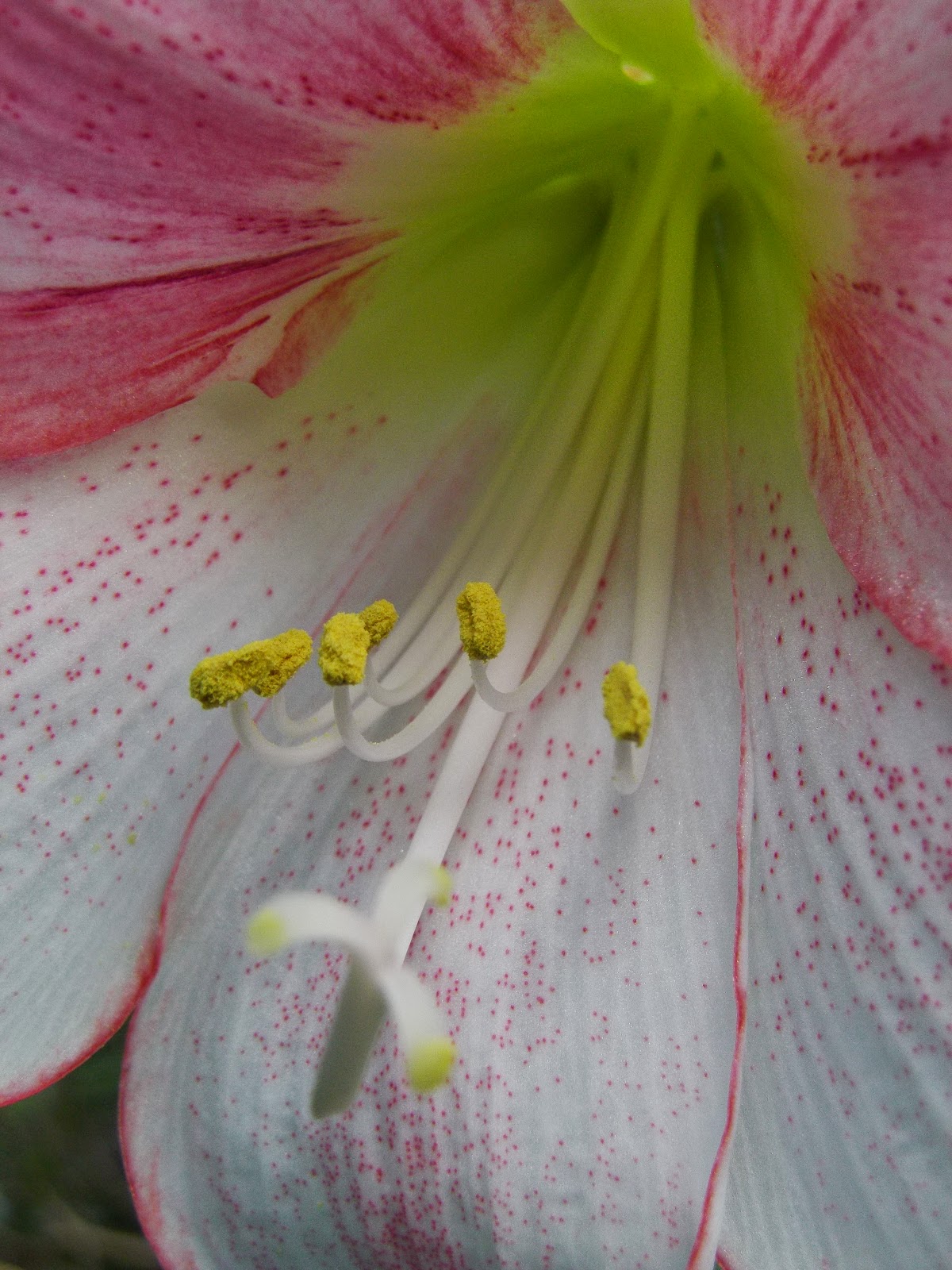
After visiting the greenhouse, we went further along the parkway into the town of Chippawa to one of our favourite spots, Betty's Restaurant. It is famous for its fish and chips or prime rib dinner. When there, try their pie for dessert which tastes home made. Check out the photos below and if you are ever in Niagara Falls, be sure to drop by one or both of these spots. I'm sure you won't be disappointed.
Sunday, May 10, 2015
Niagara Falls Greenhouse And Betty's Restaurant
Today was Mother's Day and so I wanted to show my wife some fun things. We drove to Niagara Falls along the Niagara Parkway and went to visit one of the lesser known sites, the Niagara Greenhouse or more commonly known as the Floral Showhouse. If you have never visited here, it is definitely worth a visit. Four times a year, they change their main display to reflect flowers that are in bloom at the time. Today's main flowers were hydrangeas. Also at the greenhouse, one room contains plants that are there year round.
Saturday, May 2, 2015
Stoneboats Restaurant in Bronte
Stoneboats has been renamed to Yolanda's Spuntino Casa which roughly translates to Yolanda's House of Appetizers and Snacks. What makes this building interesting is what its walls are made from.
In the 1840's, boats called stone-hooker boats, or stoneboats, using grappling hooks, lifted rocks and boulders, in particular well rounded and often flat shale from the shores of Lake Ontario from Whitby to Port Credit.
The stone loads, known as toises, were loaded onto schooners and shipped to Toronto, where they were sorted by size according to usage. Smaller stones would be used for road ballast, flat stones for pavement, and large round stones would end up in building foundations. This is where the material came from to build Stoneboats.
By the 1850's, more than 30 stone boats were in use, but farmers started to complain that the practice was eroding their farmlands, and in 1857, laws were enacted that boats could not work any closer than 30 metres from the shore.
This, and the fact that concrete replaced stones in construction, the stone boats stopped scooping up the rocks from the lake bed. Not many of the original buildings exist. Stoneboats or should I say, Yolanda's is one of the few remaining. It was constructed from theses stones by a one-time stone boat captain, hence the name.
It is located at 49 bronte Road in the picturesque village of Bronte which is now part of Oakville. It is designated a Heritage site and is worth a visit for a meal, a beer or whatever.
In the 1840's, boats called stone-hooker boats, or stoneboats, using grappling hooks, lifted rocks and boulders, in particular well rounded and often flat shale from the shores of Lake Ontario from Whitby to Port Credit.
The stone loads, known as toises, were loaded onto schooners and shipped to Toronto, where they were sorted by size according to usage. Smaller stones would be used for road ballast, flat stones for pavement, and large round stones would end up in building foundations. This is where the material came from to build Stoneboats.
By the 1850's, more than 30 stone boats were in use, but farmers started to complain that the practice was eroding their farmlands, and in 1857, laws were enacted that boats could not work any closer than 30 metres from the shore.
This, and the fact that concrete replaced stones in construction, the stone boats stopped scooping up the rocks from the lake bed. Not many of the original buildings exist. Stoneboats or should I say, Yolanda's is one of the few remaining. It was constructed from theses stones by a one-time stone boat captain, hence the name.
It is located at 49 bronte Road in the picturesque village of Bronte which is now part of Oakville. It is designated a Heritage site and is worth a visit for a meal, a beer or whatever.
Saturday, January 3, 2015
Belfountain Conservation Area
Last summer, we visited one of Ontario's most unusual parks known as the Belfountain Conservation Area. It was the creation of Charles W. Mack who is known as the industrialist who invented and then manufactured the cushion stamp.
When finished, the park contained a dam for swimming, a lookout point and a cave named Yellowstone that was converted into a chapel-like room and a suspension bridge across the river. The most noteworthy feature is a stone fountain with a bell on top, commemorating the name of the neighbouring village, Belfountain.
In 1955, the Credit Valley Conservation Authority purchased the property and varous hiking trails were added. The park lies in the village of Belfountain on the Forks of the Credit Road.
When finished, the park contained a dam for swimming, a lookout point and a cave named Yellowstone that was converted into a chapel-like room and a suspension bridge across the river. The most noteworthy feature is a stone fountain with a bell on top, commemorating the name of the neighbouring village, Belfountain.
In 1955, the Credit Valley Conservation Authority purchased the property and varous hiking trails were added. The park lies in the village of Belfountain on the Forks of the Credit Road.
Monday, November 3, 2014
Ireland House at Oakridge Farm
Yesterday, we visited Ireland House in Burlington. It was built between 1835-1837 and was the home of Joseph Ireland, an English Immigrant and one of Burlington's earliest settlers. It was lived in by Ireland family descendants until 1987, when it was purchased by the city of Burlington to become its second museum.
The house is decorated in three eras of the Ireland occupancy, 1850's, 1890's and 1920's, each representing a time period one of the Ireland family resided there. It is well-preserved with all original possessions of the Irelands. It is located at 2168 Guelph Line in Burlington and is an important part of Burlington's history. It is well worth the trip and when there,make sure you take a tour by one of the knowledgeable guides.
Monday, October 13, 2014
Lowville Park
Located in north Burlington along Guelph Line is the small village of Lowville, and one of its highlights is Lowville Park. It is located on Bronte Creek and contains several acres with picnic areas, trails for hiking or snow shoeing in the winter, an area for tobogganning in the winter and play areas for children.
It is a relaxing area to come and just unwind for a couple of hours. Make sure you visit the ice cream store across from the park behind the Bistro.
Also of note in the park is a school house that was built in 1888. It has been designated as a Heritage Building that is now used for meetings and Boy Scout activities. Unfortunately, it is not open to the general public. In 1947, a parks maintenance building was added and also functions as a workshop.
It is a relaxing area to come and just unwind for a couple of hours. Make sure you visit the ice cream store across from the park behind the Bistro.
Also of note in the park is a school house that was built in 1888. It has been designated as a Heritage Building that is now used for meetings and Boy Scout activities. Unfortunately, it is not open to the general public. In 1947, a parks maintenance building was added and also functions as a workshop.
Friday, October 3, 2014
Point Abino Lighthouse
Earlier this summer, we drove down to Fort Erie and visited a few areas. One of the most impressive things that we saw was the Point Abino Lighthouse. It is built of poured concrete and is unlike any other in Ontario. It is constructed in a style of architecture known as Greek Revival.
The lighthouse was completed in 1918, built to replace a light ship that was destroyed in a storm in 1913, killing all on board. A light-keeper's residence was added in 1921. No light house in Ontario is permanently staffed but most are still in use. Point Abino was the last to be automated.
The light house has been declared a National Historic Site, and in 2001, was purchased by the town of Fort Erie.
It is located on Lake Erie just west of Fort Erie. It is in a gated community, and is accessible only after you sign a waiver stating that you will remain on the roadway and not take any photos of peoples' properties. Be prepared for quite a walk. It is over a mile to the lighthouse. If going, take a bike with you, because they will allow you to cycle out to the site.
It is quite a trek to get there, but it is definitely worth it. No other lighthouse is like it and it is an interesting piece of Ontario history.
The lighthouse was completed in 1918, built to replace a light ship that was destroyed in a storm in 1913, killing all on board. A light-keeper's residence was added in 1921. No light house in Ontario is permanently staffed but most are still in use. Point Abino was the last to be automated.
The light house has been declared a National Historic Site, and in 2001, was purchased by the town of Fort Erie.
It is located on Lake Erie just west of Fort Erie. It is in a gated community, and is accessible only after you sign a waiver stating that you will remain on the roadway and not take any photos of peoples' properties. Be prepared for quite a walk. It is over a mile to the lighthouse. If going, take a bike with you, because they will allow you to cycle out to the site.
It is quite a trek to get there, but it is definitely worth it. No other lighthouse is like it and it is an interesting piece of Ontario history.
Friday, September 19, 2014
St. Jacobs Farmers' Market
A while back, we went to visit St. Jacobs Farmers' Market, about 3 km. outside St. Jacobs village. I was surprised to see how popular this place is. There must have been hundreds of people there. Dozens of local farmers sell their produce and a lot of them are Menonite and their baked goods are second to none. If you want to get any of these, best to get there early.
There is also a flea market there as well, so there is something for everyone. I recommend going to visit here, but it is not open every day and probably the outside market will soon be closed as summer ends. There is still an indoor market, but it is worth visiting when the outside market is open.
Subscribe to:
Posts (Atom)